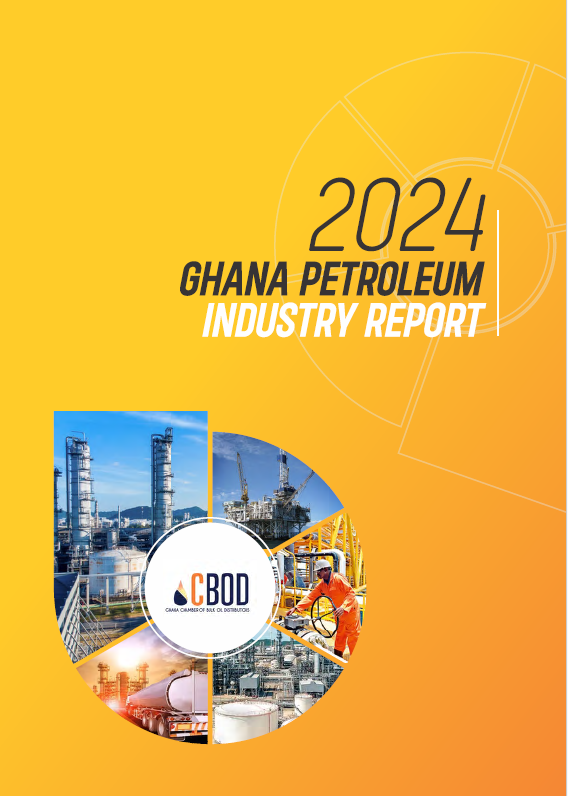
The Ghana Chamber of Bulk Oil Distributors (CBOD) has released the 2024 Ghana Petroleum Industry Report, its annual flagship publication offering in-depth analysis of Ghana’s upstream and downstream petroleum sectors. The report serves as a key reference for industry players, policymakers, academics, and business leaders, supporting informed decisions on investment, policy, and sector development.
The 2024 edition focuses on upstream petroleum developments and downstream market dynamics. It situates Ghana’s petroleum industry within a broader global context, recognising the influence of international political shifts, regulatory changes, and energy transition policies on oil and gas markets.
Globally, 2024 saw heightened political activity, including changes in leadership in major economies like the United States and the United Kingdom. These developments, in conjunction with ongoing geopolitical tensions and energy transition efforts, influenced investment flows and regulatory frameworks. Key among these was the introduction of the European Union Methane Regulation (Regulation (EU) 2024/1787), which requires importers of crude oil and natural gas to report methane emissions and comply with stricter benchmarks. In the UK, changes under the Energy Profits Levy tightened fiscal conditions for conventional oil and gas investments while encouraging decarbonisation.
Locally, Ghana’s upstream sector remained below pre-COVID production levels. No new petroleum agreements have been ratified since 2018, with investor sentiment partly affected by the arbitration between Eni/Vitol and the Government of Ghana over the unitisation of the Sankofa Field and Afina discoveries. In 2024, the total production of crude oil was 48.24 million barrels, indicating a slight decrease from 2023 and approximately 32.5% less than in 2019. However, government revenue from upstream petroleum increased significantly to US$1.36 billion, representing a 28.3% rise over 2023 and the second-highest annual petroleum receipts since commercial production began.
In the downstream sector, policy initiatives continued to shape market outcomes. The Ministry of Energy advanced the Biofuel Development and Commercialisation Initiative, aiming to provide 3 billion litres of biofuels by 2035, and moved ahead with the National LPG Promotion Programme, which distributed 16,000 LPG cookstoves across eleven MMDAs. Petroleum product consumption increased by 17% to 5.27 million metric tonnes, driven largely by non-power sector demand. Gasoil accounted for 50% of total consumption, followed by gasoline at 37%. LPG consumption rose by 7% despite higher pump prices, supported by improved economic activity and the rollout of the Cylinder Recirculation Model (CRM), while kerosene consumption declined by 31%.
The year also saw a 60% increase in refinery output, largely driven by the operations of the Sentuo Oil Refinery, and a significant rise in refined product exports, reflecting growing regional trade opportunities.
The report concludes with policy recommendations, including increased FX allocations to BIDECs, measures to stabilise the cedi, removal of burdensome taxes on LPG, promotion of petroleum product exports, and the redirection of premix fuel subsidies toward broader social development initiatives.
The 2024 Ghana Petroleum Industry Report reinforces CBOD’s role as a trusted source of industry intelligence, contributing to a more resilient, transparent, and competitive petroleum sector in Ghana.
Read the full report: https://cbodghana.com/industry-reports/